

Keep reading to learn about few simple ways we can honor our planet through the choices we make surrounding our nutrition.
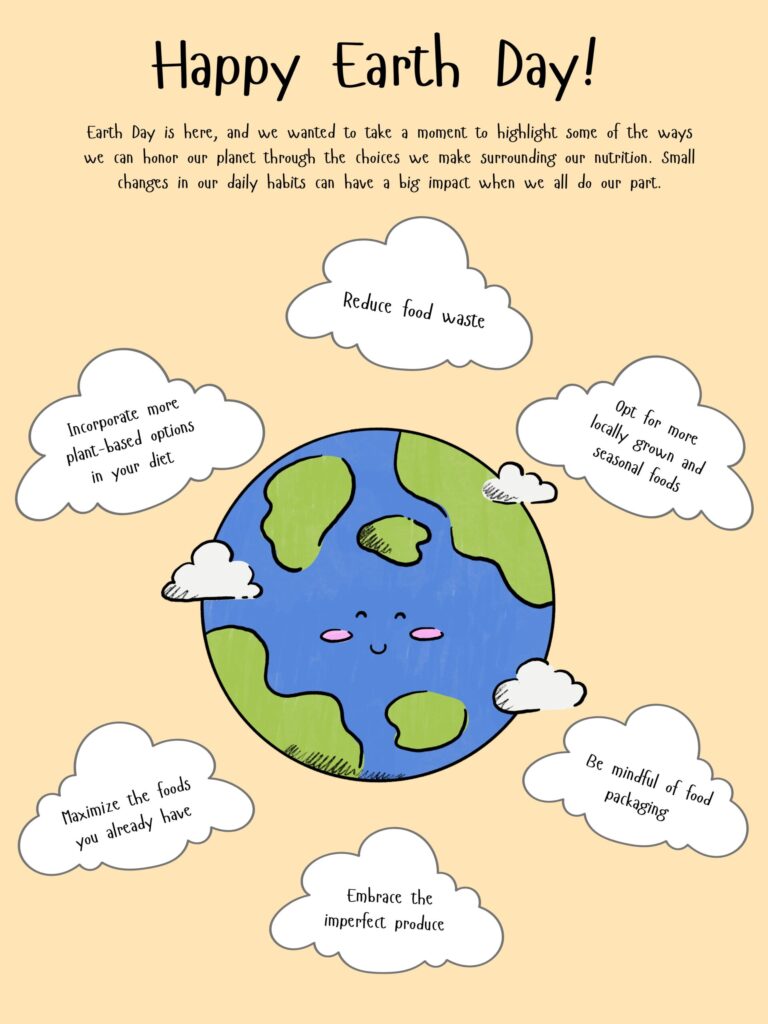
Incorporate more plant-based foods into your diet:
One thing you always hear when sustainable eating is being discussed is “eat more plant-based,” but we don’t always get into the why. Firstly, consuming a more plant-based diet inherently limits our meat consumption. The farming industry utilizes immense land and water resources, and reducing the need for industrial meat production helps free up those resources. The animal processing industry is also a major contributor to environmental pollutants, particularly from animal waste and runoff that can impact surrounding ecosystems. Lastly, animal agriculture is a large contributor to greenhouse gas emissions, playing a significant role in climate change. Choosing more plant-based foods is a simple shift that can have a meaningful impact when it comes to sustainability.
Reduce food waste:
Food waste rates are exponentially high across individuals in the United States. Statistics suggest roughly 30–40% of the U.S. food supply is wasted annually. These are staggering numbers, especially considering the cost of food and the number of people in need across the globe. So how can we work to improve these numbers? We as individuals can work on buying only what we need. Over-purchasing is a habit that often leads to food waste. Working to forecast your needs and ensure you are purchasing perishable foods that can be used prior to their expiration can make a meaningful difference. If you do have perishable items that need to be used, storing them in ways that extend shelf life, such as freezing or preserving, can also help reduce waste. It’s also important to understand the difference between “use-by” and “sell-by” dates, as confusion around labeling often leads to unnecessary food waste. “Sell-by” is primarily an indicator for retailers, signaling when a product should be removed from shelves. Consumers can often still safely use the product for a short period beyond this date. “Use-by” is an indicator of quality, suggesting the food may begin to decline in freshness or taste. It does not necessarily mean the food is unsafe or expired, but rather approaching the end of its optimal quality.
Opt for more locally grown and seasonal foods:
Shopping for locally grown, seasonal foods provides benefits to the retailer, the consumer, and our planet! As a consumer, purchasing locally grown foods enhances freshness and flavor, as a shorter farm-to-table timeline allows foods to be consumed shortly after harvest. This helps preserve taste and quality. From a retailer’s perspective, customers from the local community help support small businesses, strengthen the local economy, and can contribute to greater job availability. As for how our earth benefits from this dynamic, shopping locally helps reduce environmental pollutants from long-distance transportation of products and can also support greater biodiversity within local ecosystems.
Maximize the foods you already have:
Before hitting the grocery store, shop your pantry and freezer first. Things like canned chickpeas and frozen broccoli tend to be forgotten when it comes to meal planning. Take an inventory of the ingredients you have on hand and try to incorporate them into your meal plan for the week. You may only need one or two additional ingredients to make a balanced meal come together. We also encourage you to embrace the leftovers. Use the air fryer to reheat leftover potatoes or vegetables. Cooked proteins like chicken or salmon make great additions to salads or grain bowls for convenient packed lunches. As an added bonus, using your leftovers saves time, money, and energy!
Embrace the imperfect produce:
Don’t overlook the value of those misshapen tomatoes, bruised bell peppers, or slightly wilted greens! While imperfect produce might not always look aesthetically pleasing, it still provides an abundance of nutrients. Sometimes you just have to get a little creative and find a new purpose for aging produce. Misshapen tomatoes? Chop them up and make a yummy pico! Bruised bell peppers? Roast them, blend, and add them to pasta sauce! Wilted greens? Blend them into a pesto or throw them into a smoothie! Cut down on food waste and fuel your body, best of both worlds 🙂
Be mindful of food packaging:
Next time you are at the store, take a look across the produce section! Can you spot various produce items packed individually and wrapped in extra plastic? What a waste! Instead of buying items with excess packaging, opt for loose produce that you can place in a biodegradable produce bag or a reusable cloth bag. It’s a super simple practice that can make a big difference!
In conclusion, there are many different ways we can become more mindful in aiding our contribution to making the Earth a better, more sustainable place! With that being said, making all these changes at once can be overwhelming and can often contribute to feelings of guilt if you’re not emulating “perfect” practices. Just take a breath and recognize that a little bit can go a long way. Start small and build up to further changes, quality over quantity!